
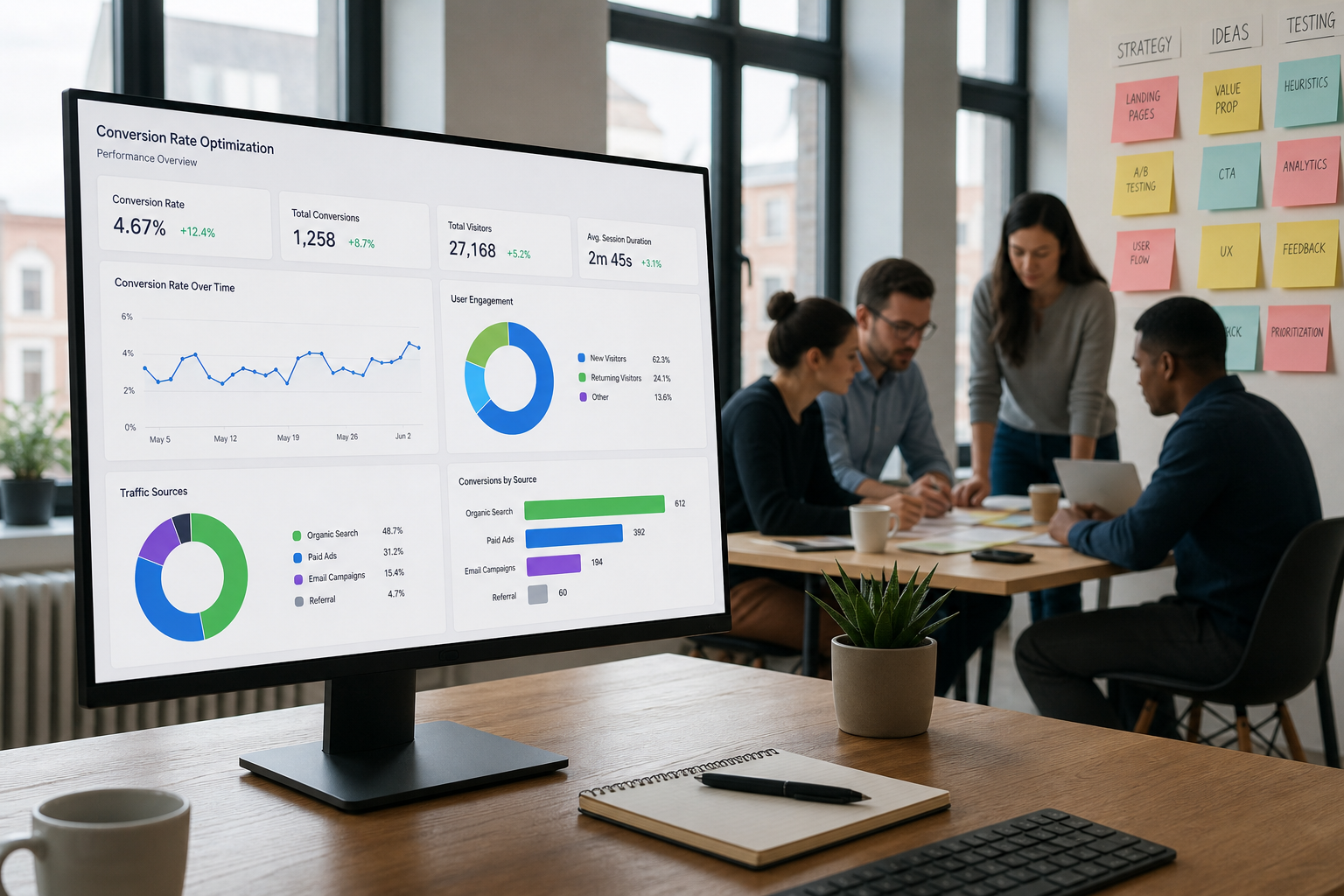

Why more traffic will not solve a broken marketing funnel
More traffic can expose a problem. It rarely fixes one.
If users land on your website, read your content, click your ads, or open your emails but fail to take the next step, the issue may not be visibility. It may be the user journey.
That is where conversion rate optimization becomes essential.
In an era of zero-click search, users may encounter your brand in AI answers, ads, summaries, search results, reviews, and social content before they ever visit your website. That makes the on-site journey even more important once they arrive.
Conversion rate optimization is the process of improving the path users take from first interaction to meaningful action. That action might be a form submission, consultation request, purchase, demo booking, phone call, donation, or application.
A strong marketing funnel does not simply move people from awareness to conversion. It removes friction, answers questions, builds trust, and makes the next step easier.
What Is Conversion Funnel Optimization?
Conversion funnel optimization is the process of improving each stage of the marketing funnel so more users complete the actions that matter to your business.
A typical marketing funnel includes:
- Awareness
- Consideration
- Intent
- Conversion
- Follow-up or retention
At each stage, users have different questions and different reasons to hesitate. Conversion funnel optimization identifies where people drop off, why they leave, and what changes can help them move forward.
This often includes improving page speed, messaging, calls to action, forms, navigation, landing pages, email follow-up, CRM workflows, and analytics tracking.
For teams investing in digital marketing audit services, funnel performance is often one of the most important areas to evaluate because it connects marketing activity to business outcomes.
Why the User Journey Matters
The user journey is the path someone takes as they discover, evaluate, and engage with your brand.
That journey rarely happens in one straight line. A prospect might see an ad, search your company name, read a blog post, visit a service page, compare competitors, return days later through email, and finally submit a form.
This is why user journey mapping is such a useful exercise. It helps teams visualize what users are trying to accomplish, where they encounter friction, and which touchpoints influence their decisions.
Connecting data across channels will also help teams to better understand how people interact with your brand over time.
If your reporting only captures the final click, you may miss the parts of the journey that created trust.
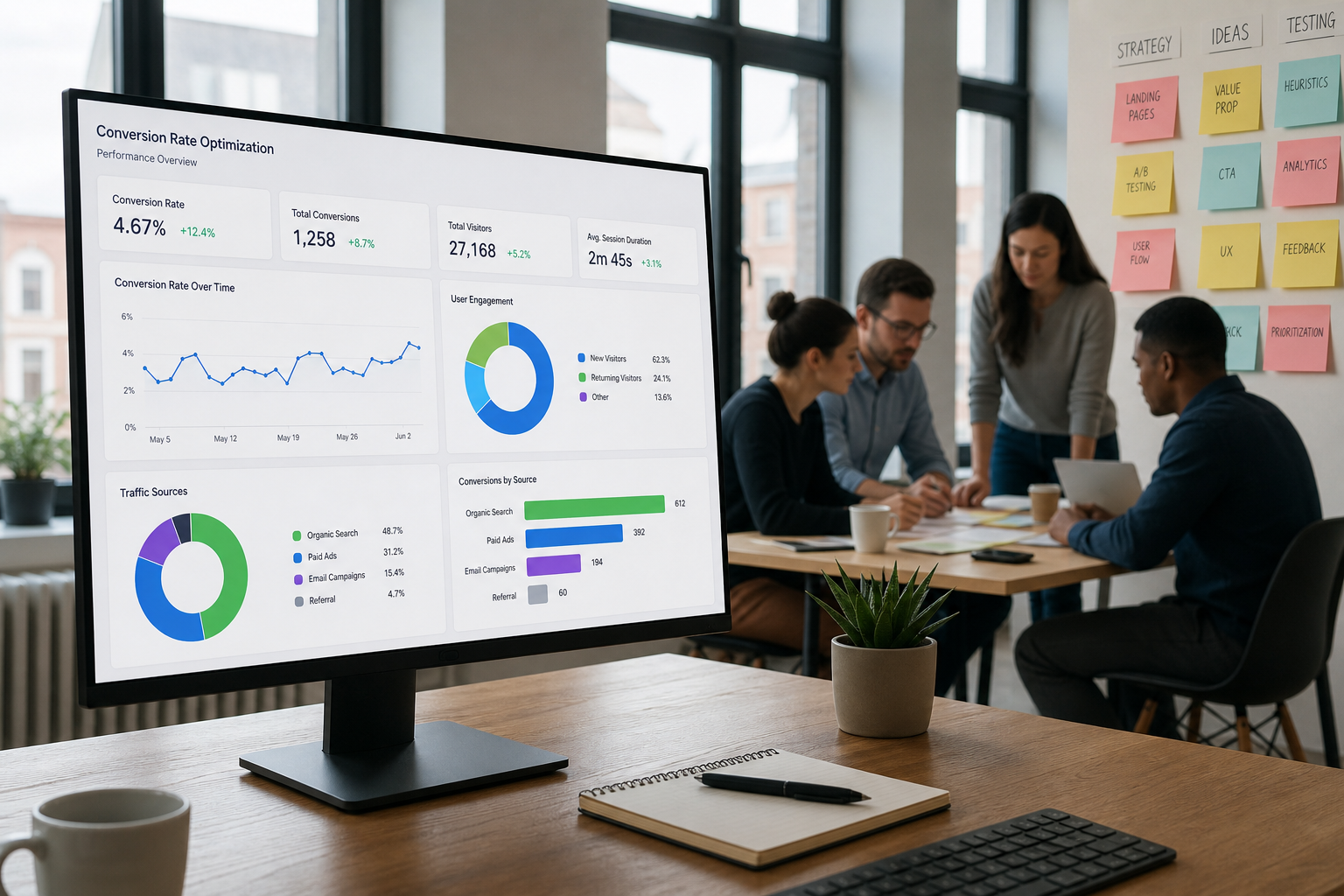 User journey mapping can show you which channels generate the most conversions, and where users are dropping off before taking action.
Common Problems That Hurt Conversion Rates
Most conversion issues are not dramatic. They are small points of friction that accumulate.
Common problems include:
- unclear calls to action
- slow page load times
- confusing navigation
- long or intimidating forms
- weak trust signals
- disconnected follow-up
- unclear pricing or service information
- poor mobile experience
- inconsistent messaging across channels
A user may not consciously notice every issue. But each one creates hesitation.
When enough hesitation builds, they leave.
How to Optimize a Marketing Funnel
Marketing funnel optimization starts with understanding where users are dropping off and what they need at each stage.
Start With the Data
Before changing copy, design, or offers, look at the data.
User journey mapping shows teams how users move through a website, which pages generate engagement, and where conversion issues lie. Custom GA4 funnel explorations can make SEO wins more visible to stakeholders, by connecting organic traffic to actions users take down the road.
Useful data points include:
-
-
- landing page engagement
- form conversion rates
- CRM source data
- call tracking
- heatmaps
- session recordings
- paid media reports
- email campaign metrics
- landing page engagement
-
Understanding what data you can already leverage and how those metrics align with your goals can help you understand how to maximize ROI.
This is also where SEO dashboards and marketing analytics tools can help teams see performance across channels more clearly.
Map the Journey
Once the data shows where users drop off, map the journey.
Ask:
-
-
- What brought this user here?
- What question are they trying to answer?
- What would make them trust us?
- What is the next logical step?
- What might prevent them from taking action?
- What brought this user here?
-
A simple user journey map can reveal where your marketing funnel is asking too much too soon or failing to provide enough information at the right moment.
Improve the Page Experience
Conversion rate optimization often starts with the page itself.
Strong conversion pages usually have:
-
-
- clear headlines
- focused messaging
- obvious calls to action
- strong proof points
- fast load times
- simple forms
- mobile-friendly layouts
- content that matches search intent
- clear headlines
-
For B2B companies, Shopify notes that conversion rate optimization often involves improving the buying experience, not simply driving more traffic. That same principle applies across industries, including to companies that don’t sell products online.
A better experience creates more confidence. More confidence leads to more action.
 Your visibility and value proposition may attract customers, but they shouldn't encounter red flags or obstacles that prevent them from converting.
Strengthen Trust Signals
People convert when they feel confident.
Trust signals may include:
-
-
- testimonials
- case studies
- reviews
- industry experience
- partner badges
- certifications
- transparent pricing
- clear process explanations
- helpful educational content
- testimonials
-
Trust also depends on consistency. If your ads promise one thing, your landing page says another, and your follow-up email feels disconnected, the journey becomes harder to trust.
That is why omnichannel marketing matters. Consistent messaging across channels makes the user journey feel more coherent.
Fix the Follow-Up
A conversion does not always happen on the first visit.
Many users need follow-up before they are ready to take action. That may include email nurturing, retargeting, sales outreach, automated reminders, or CRM-based workflows.
For businesses using HubSpot, working with experienced HubSpot consultants can help connect forms, CRM stages, email workflows, attribution data, and sales follow-up into a smoother conversion system.
This is especially important when users move between marketing and sales. A strong funnel should make the handoff feel seamless.
AI Tools for Optimizing Marketing Funnels
AI tools can help identify friction points, summarize user behavior, segment audiences, personalize follow-up, and surface patterns in performance data.
Useful applications include:
- analyzing landing page performance
- identifying content gaps
- summarizing call or chat transcripts
- recommending follow-up sequences
- predicting lead quality
- personalizing email workflows
- identifying underperforming funnel stages
AI can speed up analysis, but strategy still matters. The best use of AI in conversion rate optimization is to help teams find patterns faster and test improvements more efficiently.
Conversion Rate Optimization Best Practices
The best practices for optimizing marketing funnels are usually straightforward. Here are nine tips to help get you started off right:
The best conversion rate optimization strategies are not built around random tweaks. They are built around understanding what users need in order to move forward.
Why Funnel Optimization Improves Marketing ROI
Marketing gets more expensive when funnels are inefficient.
If paid ads drive traffic to weak landing pages, cost per lead rises. If SEO attracts qualified users but forms are confusing, organic growth underperforms. If email campaigns generate clicks but the destination page does not match the message, engagement gets wasted.
Conversion funnel optimization improves ROI by helping more of your existing traffic turn into meaningful outcomes.
This is why the best boutique digital marketing agencies for conversion funnel optimization focus on the full system: traffic, messaging, landing pages, analytics, CRM workflows, and follow-up.
Build a Funnel That Makes the Next Step Easier
Conversion rate optimization works because it respects the user journey.
People rarely convert because a business adds more noise. They convert when the path feels clear, trustworthy, and worth taking.
At De Novo Digital, we help businesses improve conversion performance by connecting website strategy, analytics, SEO, paid media, HubSpot workflows, and user journey optimization into one practical growth system.
If your marketing is generating traffic but not enough qualified leads, the funnel may be the problem.
Let’s fix the journey.
Get in touch with us today to learn more about what our conversion funnel optimization services can do for your business.