


How to measure digital marketing performance and turn data into real business insights
Digital marketing produces more data than ever before. Every website visit, ad impression, email click, and content download generates measurable signals about how audiences interact with your brand.
Yet many marketing teams still struggle with a fundamental question: how do you actually measure digital marketing performance?
Collecting data is easy. Interpreting it – and connecting it to meaningful business outcomes – is much harder. One of the most effective ways to understand what’s working (and what isn’t) is through a digital marketing audit.
Understanding how to measure marketing performance allows companies to refine campaigns, allocate budgets more effectively, and demonstrate the true value of marketing investments. When measurement is done correctly, it turns marketing from a cost center into a predictable growth engine.
Why Measuring Digital Marketing Matters
Modern marketing operates across multiple channels – search, social media, email, paid advertising, and content marketing. Without a clear measurement framework, it becomes difficult to determine which efforts are driving results.
Digital marketing audits evaluate how effectively marketing channels, website performance, and analytics systems work together. These audits help businesses understand what is driving results and where improvements can unlock additional growth.
Organizations that invest in marketing analytics and measurement gain a significant advantage. They can identify which strategies generate engagement, which campaigns influence revenue, and which channels deserve greater investment.
Research from Boston Consulting Group highlights that companies with mature marketing measurement practices consistently outperform competitors because they can optimize campaigns based on real performance data rather than assumptions.
Measuring digital marketing effectiveness isn’t just about tracking numbers – it’s about making better decisions.
What Is a Digital Marketing Audit?
A digital marketing audit is a structured evaluation of your company’s marketing performance across channels such as search, paid advertising, content marketing, email campaigns, and website performance.
Many organizations conduct audits annually or before launching new campaigns to ensure their marketing strategy aligns with business goals.
A typical digital marketing audit service examines areas such as:
• website performance and user experience
• organic search visibility and SEO
• paid media performance
• email marketing engagement
• analytics tracking and reporting accuracy
This process helps marketing teams understand where their strategy is working and where adjustments can improve results.
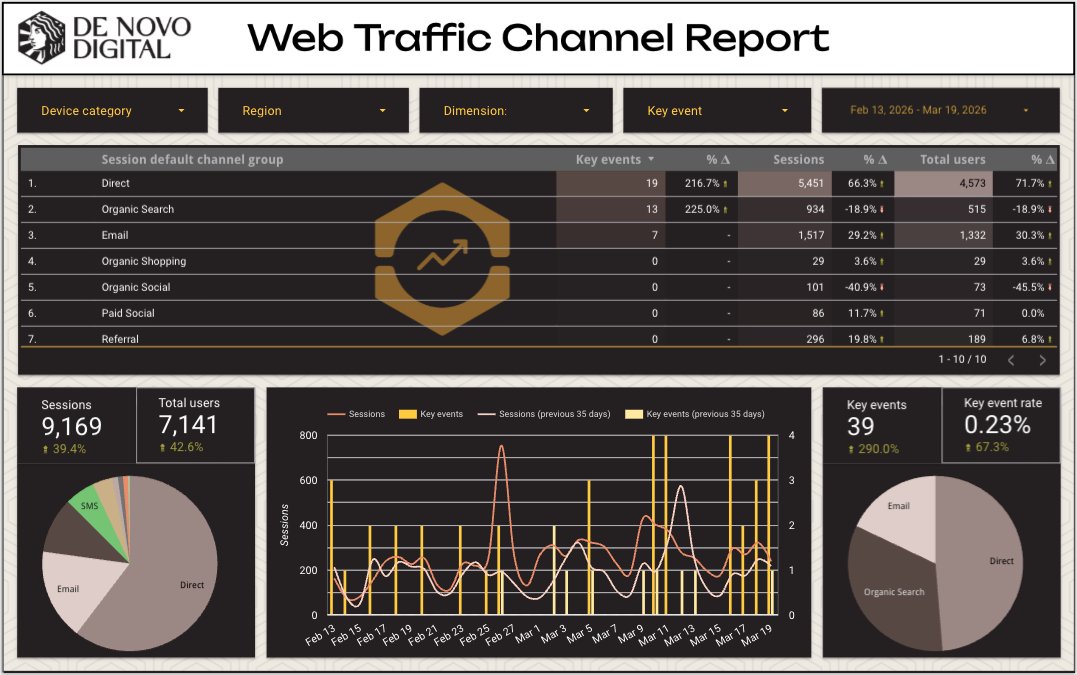 Understanding which channels provide the most Key Events can help you understand exactly how your marketing efforts are impacting revenue.
What Does Measuring Digital Marketing Performance Actually Mean?
Measuring digital marketing performance involves evaluating how marketing activities contribute to specific business goals.
These goals typically include:
- generating qualified leads
- increasing website traffic
- improving customer engagement
- driving conversions and revenue
- strengthening brand awareness
Effective measurement connects marketing activities to these outcomes.
For example, email marketing campaigns may generate thousands of clicks but few conversions. Without measurement, they might appear successful, but with proper analytics, marketers can see that engagement did not translate into meaningful business impact.
This is why digital marketing measurement metrics must go beyond surface-level indicators.
Many businesses begin by conducting a website marketing audit to identify technical issues, conversion barriers, and user experience problems that may affect marketing performance.
Key Metrics Used to Measure Website Performance
When evaluating how well digital marketing efforts perform, website data often provides the clearest picture of user behavior. Website audit services can reveal valuable actionable insights.
Several metrics help marketers understand how effectively their website supports marketing goals.
Website Traffic
Website traffic measures how many visitors reach your site and where they come from. Analyzing traffic sources reveals which marketing channels – search engines, social media, email campaigns, or paid ads – are driving the most visitors.
Tracking traffic trends over time also helps identify whether marketing strategies are generating sustained growth.
Engagement Metrics
Engagement metrics provide insight into how users interact with your website once they arrive. These metrics include time on page, pages per session, and bounce rate.
High engagement typically indicates that your content aligns with user intent, while low engagement may signal that messaging or page structure needs improvement.
Conversion Rate
Conversion rate measures how many visitors complete a desired action, such as signing up for a newsletter, downloading content, or making a purchase.
Because it directly reflects outcomes rather than activity, conversion rate is often the most valuable metric for measuring digital marketing success.
Customer Acquisition Cost
Customer acquisition cost (CAC) compares marketing investment with the number of customers acquired through those efforts. Lower CAC often indicates more efficient marketing performance.
Return on Investment (ROI)
ROI connects marketing outcomes to financial impact. Measuring digital marketing ROI requires understanding how campaigns contribute to revenue generation and long-term customer value.
Many organizations struggle to connect marketing metrics to business outcomes, but improving this alignment has become a major focus for modern marketing teams.
How Marketing Teams Measure Digital Marketing ROI
Measuring digital marketing ROI often requires combining multiple data sources, including marketing platforms, analytics software, and CRM systems.
Even the best SEO dashboards fall short if you aren't comparing that data with other channels. Marketing teams frequently evaluate ROI across channels by comparing campaign costs against the revenue generated from leads or customers attributed to those campaigns.
Some common approaches include:
- tracking conversion paths through analytics platforms
- attributing revenue to specific marketing channels
- calculating lifetime customer value from marketing-generated leads
Organizations that integrate marketing data with sales and CRM systems typically gain the clearest insight into campaign effectiveness.
Research from Harvard Business School highlights that companies measuring marketing effectiveness consistently are better positioned to improve strategy and allocate resources efficiently.
For organizations selling complex products or services, a B2B digital marketing audit often focuses on how marketing efforts support long sales cycles, lead generation, and conversion tracking.
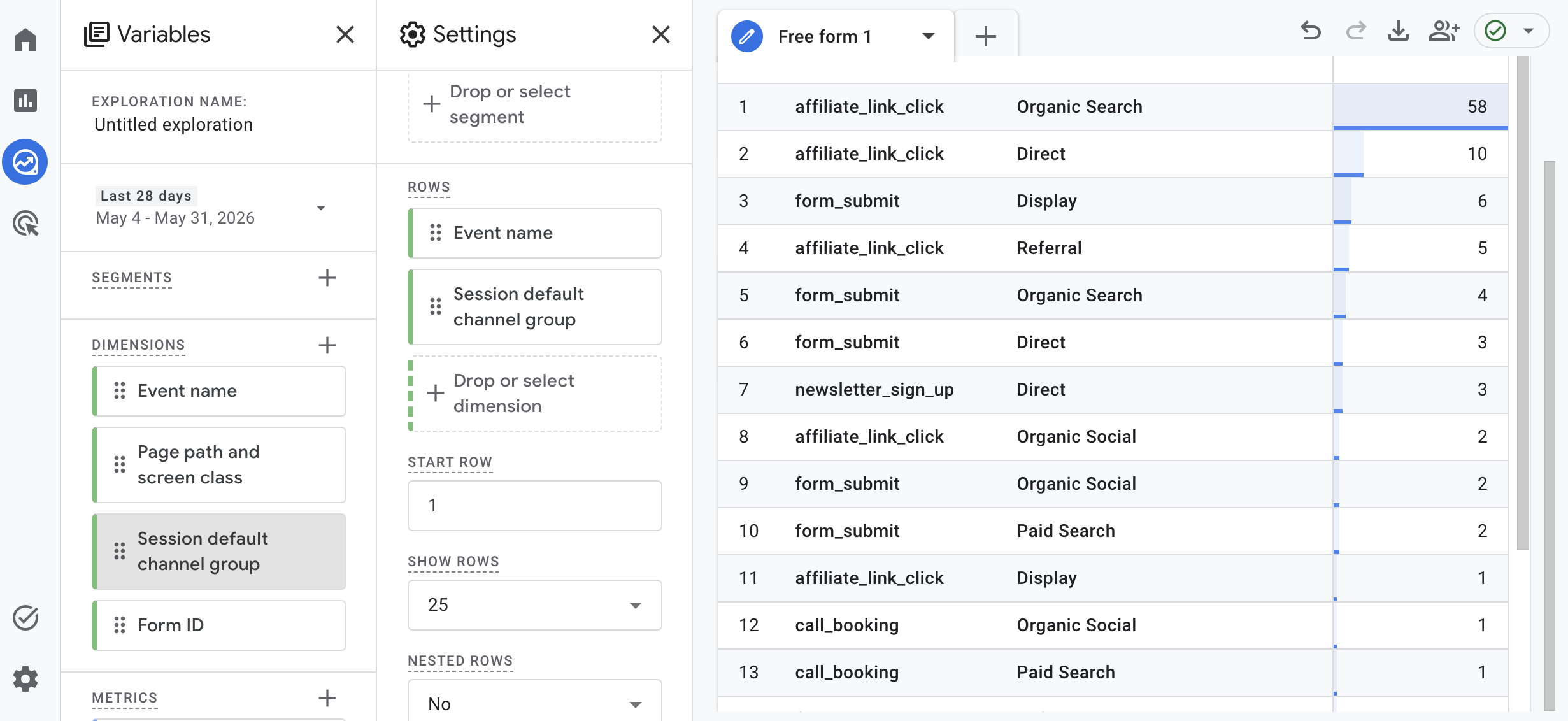 GA4 Explorations are valuable tools for monitoring custom-defined key events, so you know which channels are bringing you the most ROI.
Digital Marketing Measurement Tools
Today’s marketing teams rely on a wide range of analytics tools to measure digital marketing performance.
Common categories of digital marketing performance measurement tools include:
- website analytics platforms like Google Analytics
- marketing automation platforms
- CRM systems for tracking customer journeys
- attribution tools that connect campaigns to revenue
Many organizations combine multiple tools to build a more complete view of marketing performance. These platforms help marketers measure digital marketing campaigns across channels, monitor website metrics, and analyze how customers interact with content over time.
Just as measuring marketing performance across channels is essential to identifying which of your efforts are most effective and why, maintaining a consistent brand and message across channels is also key to building user trust. Strategy and execution both play important roles in maximizing the growth and revenue your marketing efforts bring.
Understanding the difference between omnichannel vs. multichannel marketing strategies can help you get a better sense of how to integrate marketing campaigns across channels, so you can build a cohesive brand message and optimize your overall marketing investment.
How to Conduct a Digital Marketing Audit
While the scope of an audit may vary, the basic process usually follows several steps.
Marketing teams evaluating how to conduct a digital marketing audit typically begin by reviewing performance data across all marketing channels.
This includes analyzing website traffic, search rankings, paid campaign performance, email engagement, and conversion metrics.
The next step is identifying gaps or inefficiencies that may be limiting marketing performance. For example, a B2B website audit might reveal that important product pages are not optimized for search visibility or that conversion paths are unclear.
Finally, the audit should produce a clear roadmap outlining which improvements will have the greatest impact on marketing results. Understanding how to do a digital marketing audit ensures that marketing decisions are guided by data rather than assumptions.
Measuring Digital Marketing Effectiveness Across Channels
Digital marketing rarely operates through a single channel. Most campaigns involve several touchpoints before a customer takes action.
For example, a potential customer might discover a brand through organic search, download a guide promoted through email marketing, and later convert after seeing a retargeting advertisement. While your email marketing analytics may claim attribution for this conversion, the full user journey isn’t part of the picture.
Understanding this journey requires analyzing performance across channels rather than evaluating each tactic in isolation. This is why many marketing teams track marketing measurement and analytics at the campaign level rather than focusing on individual channels.
Effective measurement frameworks combine brand metrics, engagement data, and revenue attribution to provide a more accurate picture of marketing performance.
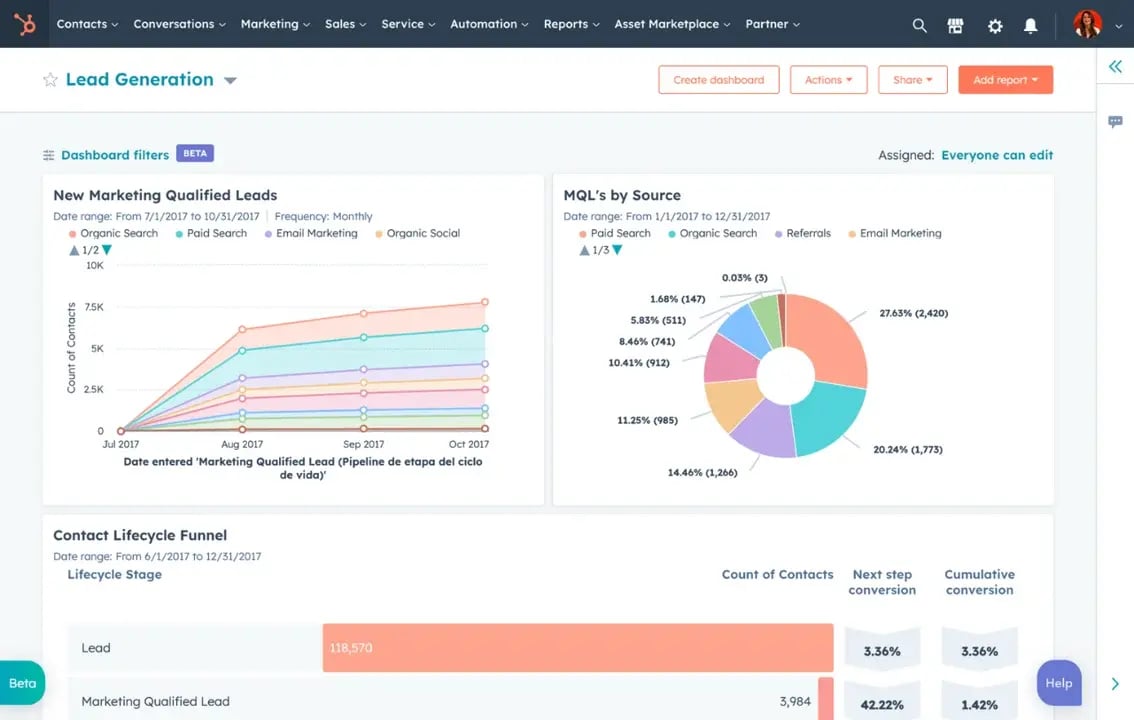 Powerful CRMs like HubSpot can give marketers one tool for measuring qualified leads by channel, so you can determine your CAC.
Common Challenges in Measuring Digital Marketing Success
Despite the availability of sophisticated analytics tools, many organizations still struggle to measure marketing performance accurately. Some of the most common challenges include disconnected data sources, unclear attribution models, and focusing on vanity metrics rather than meaningful outcomes.
For example, tracking impressions or clicks without understanding how those interactions influence conversions can create a misleading picture of campaign performance.
A stronger measurement strategy prioritizes metrics that align directly with business objectives. Industry experts emphasize measuring marketing success beyond simple engagement metrics and focusing on indicators tied to long-term value creation.
Connecting Marketing Analytics to Real Business Growth
Ultimately, measuring marketing performance should answer one core question: how does marketing contribute to business growth?
This requires connecting campaign data to outcomes like revenue, customer acquisition, and long-term brand value.
Businesses that successfully link marketing analytics with broader business objectives through digital marketing audits gain a powerful advantage. They can make smarter marketing decisions, allocate resources more effectively, scale successful campaigns, and continuously refine their marketing strategies.
For organizations looking to strengthen their marketing measurement capabilities, it often helps to start by evaluating the broader digital ecosystem supporting those campaigns.
Turning Marketing Data Into Strategic Insight
Digital marketing generates enormous amounts of data, but the true value lies in interpretation.
Understanding how to measure digital marketing performance allows companies to transform raw data into strategic insight. Instead of simply reporting metrics, marketing teams can identify patterns, uncover opportunities, and refine campaigns to produce stronger results.
When measurement frameworks align with business goals, marketing analytics becomes one of the most powerful tools for driving long-term growth.
Connect with us today to see how revamping your analytics setup can improve your long-term revenue.