
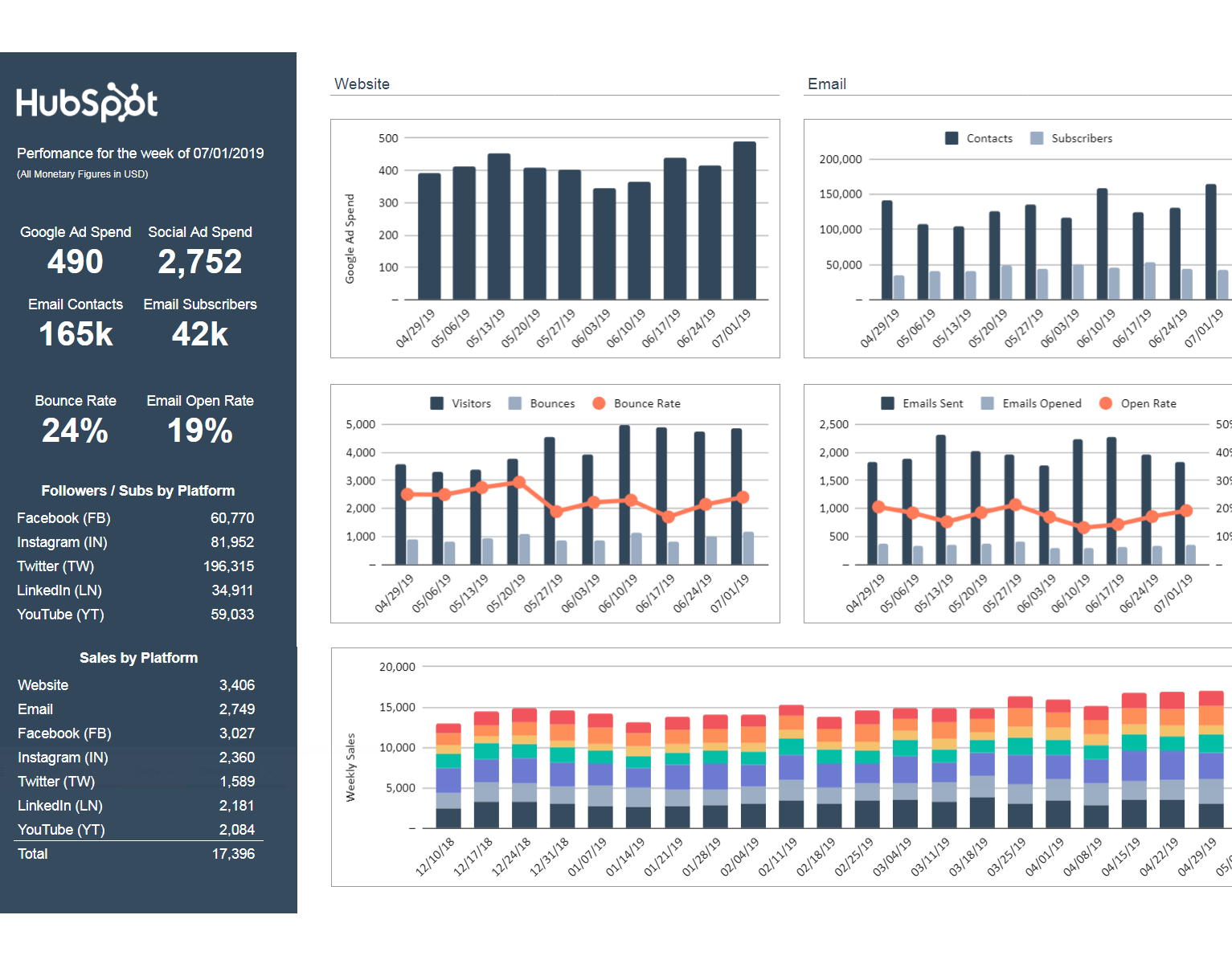

How to interpret email marketing analytics and build a more effective campaign strategy
Email remains one of the most powerful digital marketing channels available. While new technologies like AI-driven search and answer engines are changing how people discover brands, email marketing continues to deliver some of the strongest ROI in digital marketing.
But success with email isn’t just about sending newsletters or promotional offers. The real value comes from understanding email marketing analytics – the metrics that reveal how audiences interact with your campaigns and what those interactions mean for your broader marketing strategy.
Many companies collect email data but struggle to interpret it. This is a common obstacle when it comes to measuring digital marketing based on revenue, and not just vanity metrics. Open rates, click-through rates, and engagement statistics can be misleading without the right context.
Understanding what these metrics actually represent allows marketers to refine their email marketing campaign strategy and build campaigns that drive real business results.
What Is Email Marketing Analytics?
Email marketing analytics refers to the measurement and analysis of performance data from email campaigns. These insights help marketers understand how subscribers interact with messages, how campaigns influence customer behavior, and how email fits into a broader digital marketing strategy.
Most modern email marketing analytics tools track metrics such as delivery rates, open rates, clicks, conversions, and subscriber engagement over time. Platforms like HubSpot, Mailchimp, and other marketing automation systems make it possible to evaluate campaign performance in detail and compare results across multiple campaigns.
For example, HubSpot’s email analytics tools allow marketers to analyze performance metrics, identify trends, and determine which types of messages resonate most with subscribers.
As a HubSpot partner agency, these insights provide us with a foundation for improving both individual campaigns and long-term marketing strategies.
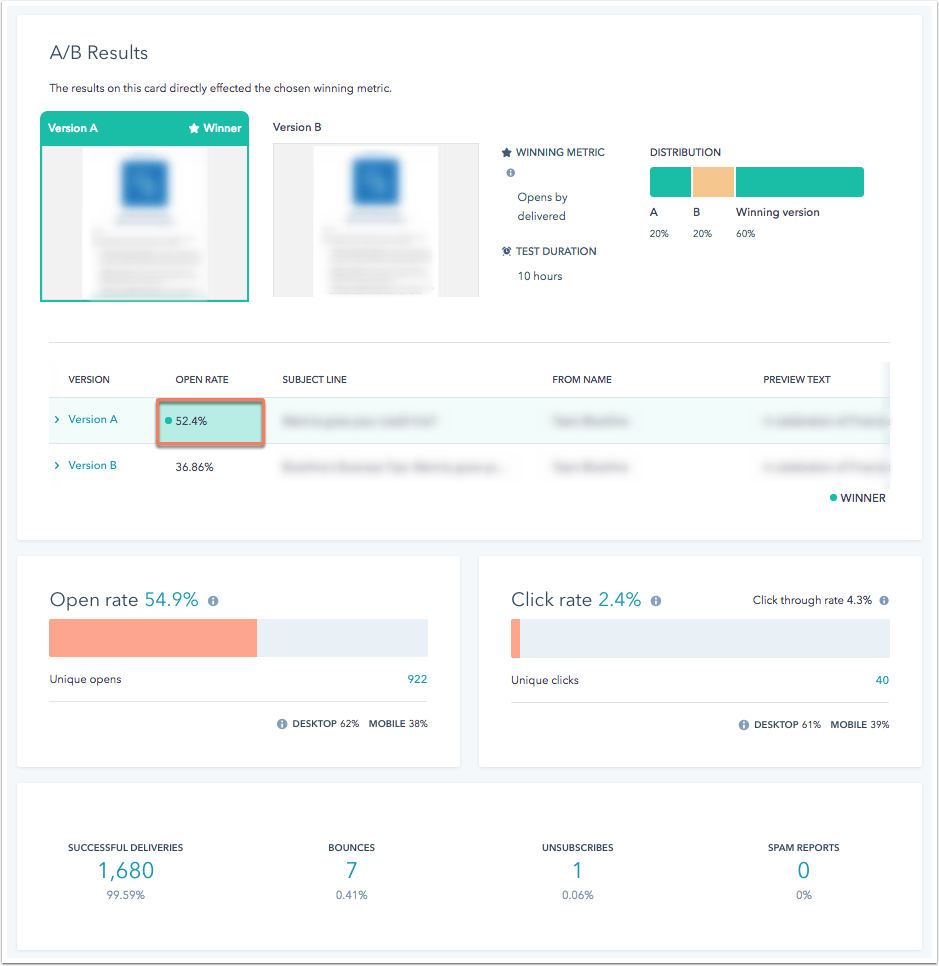 A/B testing can often determine the best strategy for improving desired metrics like open rate, click rate, and conversions. | HubSpot
The Email Marketing Metrics That Matter Most
While email platforms track dozens of data points, a few core metrics consistently provide the most meaningful insight. You might prioritize different metrics depending on your goals.
Maintaining realistic email marketing benchmarks for each campaign you run is essential – so you always have an achievable baseline to measure your key metrics against.
Open Rate
Open rate measures how many recipients open your email compared to how many received it. While open rates once served as the primary indicator of campaign success, recent privacy changes – particularly Apple’s Mail Privacy Protection – have made this metric less reliable as a standalone measure.
Open rates still provide directional insight, but they should be interpreted alongside other metrics to understand engagement accurately.
Click-Through Rate
Click-through rate (CTR) measures how many recipients clicked a link within your email. This metric is often a stronger indicator of engagement than open rate because it reflects an action taken by the reader.
A high CTR generally suggests that your content and call-to-action align with subscriber interests.
Conversion Rate
Conversion rate measures how many email recipients completed a desired action after clicking your message. That action might include making a purchase, filling out a form, or registering for an event.
Because it measures real outcomes rather than engagement alone, conversion rate is often the most valuable metric for evaluating whether your email campaign marketing strategy is working.
Unsubscribe Rate
Unsubscribe rate indicates how many recipients opted out of your list after receiving a campaign. A sudden spike may signal that content is too frequent, irrelevant, or overly promotional.
Monitoring this metric helps marketers maintain list quality and protect long-term audience relationships.
List Growth Rate
List growth measures how quickly your email subscriber base expands over time. A healthy list typically grows steadily as new contacts are added through website forms, content downloads, and other marketing channels.
Connecting Email Analytics to Campaign Strategy
Effective email marketers look beyond individual statistics to understand how campaigns contribute to broader business objectives. According to industry research, organizations that integrate marketing analytics across channels are better able to identify patterns and refine campaign performance over time.
This means evaluating email performance alongside other marketing channels such as search, social media, and website analytics.
For example, companies often use Google Analytics for email marketing to track how email traffic behaves once visitors arrive on a website. This helps marketers understand how email contributes to conversions, engagement, and customer acquisition.
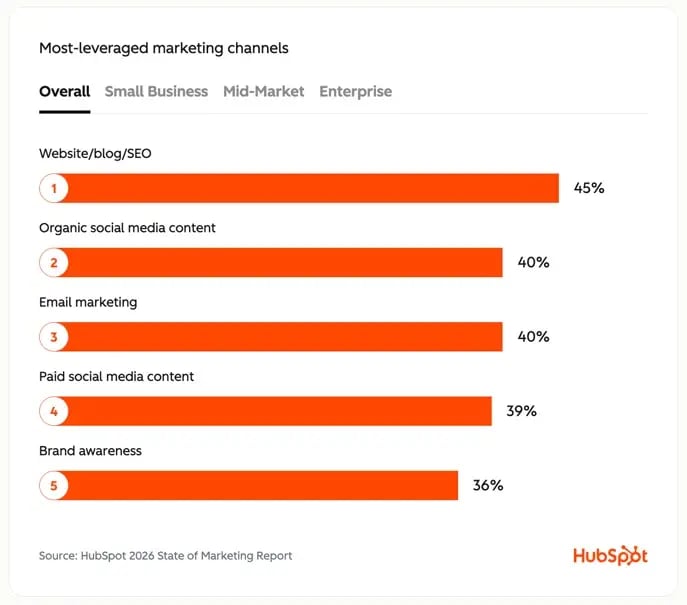 HubSpot's 2026 State of Marketing Report found email marketing ranks just behind organic web content among the most-leveraged marketing channels. | HubSpot
Email Marketing Analytics Tools That Help Interpret Campaign Data
Modern marketing platforms offer increasingly sophisticated analytics capabilities. The best email marketing analytics tools combine campaign performance data with broader marketing insights.
Some tools integrate email metrics with CRM and customer loyalty data, making it easier to understand how campaigns influence long-term customer relationships. Others connect email performance to website behavior and revenue attribution models.
These integrated tools allow marketers to answer deeper questions, such as:
- Which types of email campaigns generate the highest-value customers?
- Which audience segments respond best to certain messages?
- How does email engagement correlate with website conversions?
Understanding these relationships helps businesses refine their email marketing campaign strategy and improve campaign effectiveness over time.
AI and the Future of Email Marketing Analytics
As artificial intelligence becomes more integrated into digital marketing platforms, analytics capabilities are becoming increasingly advanced. AI-powered tools can now analyze subscriber behavior, predict engagement patterns, and recommend campaign adjustments automatically.
Even as AI reshapes search engines and online discovery, email continues to play an essential role in marketing ecosystems. In fact, many analysts argue that AI may strengthen email marketing by enabling more personalized, data-driven campaigns.
For marketers, the challenge is not simply adopting new tools but learning how to interpret the insights those tools generate.
Building a More Effective Email Marketing Campaign Strategy
Interpreting analytics correctly allows marketers to continuously refine their campaigns. The most effective email marketing campaigns often share several characteristics.
First, they focus on delivering value to subscribers rather than simply promoting products or services. Content that educates, informs, or solves problems tends to generate stronger engagement.
Second, successful campaigns segment audiences based on behavior, demographics, or past interactions. Targeted messaging increases relevance and improves engagement rates.
Finally, effective campaigns treat analytics as an ongoing feedback loop. Every campaign generates data that informs the next one, allowing marketers to steadily improve performance.
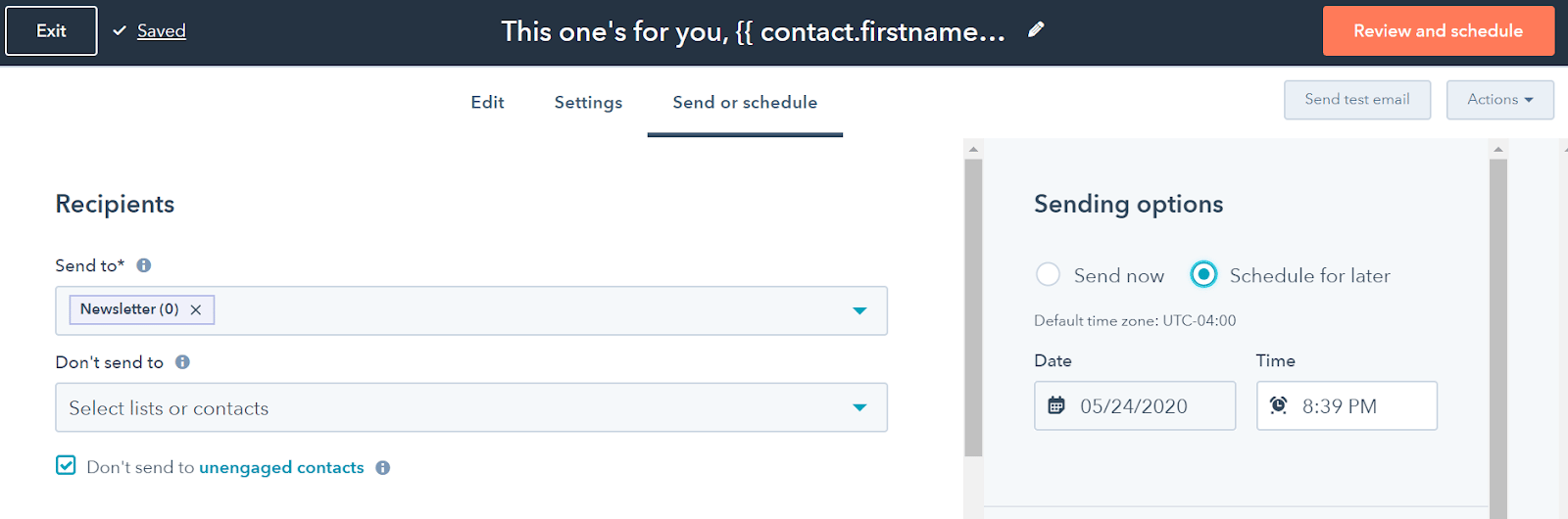 A sample email newsletter scheduling workflow on Hubspot. | HubSpot
Connecting Email Marketing With Your Broader Digital Strategy
Successful campaigns often work alongside search, content marketing, and social media strategies to guide customers through the full buyer journey.
For example, businesses investing in search visibility and Answer Engine Optimization often use email campaigns to nurture leads generated through organic search.
If your organization is evaluating broader digital strategies, you may also find it helpful to explore how emerging technologies are shaping search marketing. Our guide to SEO vs GEO for small businesses explains how AI-driven search is influencing discovery and marketing performance.
Organizations that combine strong email marketing with effective search visibility tend to build more resilient marketing ecosystems.
Understanding Your Data Is the Key to Better Email Marketing
Email marketing analytics provide valuable insights – but only when marketers understand how to interpret them. As an experienced email marketing agency, we can help you separate the signal from the noise.
The metrics behind every campaign tell a story about audience behavior, content relevance, and marketing effectiveness. By analyzing those signals carefully, businesses can refine their messaging, improve engagement, and ultimately drive better results from their marketing investments.
Whether you're evaluating email marketing analytics tools, refining a campaign strategy, or integrating email data with broader marketing analytics platforms, the goal remains the same: turning information into smarter decisions.
At De Novo Digital, we help clients understand how to improve the metrics that grow their business, and which 'vanity metrics' they should just ignore.
Want to Improve Your Marketing Performance Across Channels?
Email analytics are just one piece of the larger digital marketing puzzle. Businesses looking to improve overall marketing performance often begin with a deeper evaluation of their digital presence.
Our SEO audit services help organizations identify opportunities across search visibility, content performance, and technical optimization – creating a roadmap for stronger digital marketing results.
Connect with us today to learn how to take your marketing performance to the next level.